

Table of Contents
- Understanding Pet Loss Grief Support
- How to Create a Pet Memorial Garden
- Pet Memorial Gift Ideas for Comfort and Remembrance
- Donating to Animal Shelters in Memory of a Pet
- How to Honor a Lost Pet Through Ceremony and Tribute
- Helping Children Cope With Pet Loss
- Managing Grief Triggers at Home
- Frequently Asked Questions
Last Updated: September 11, 2026
Understanding Pet Loss Grief Support
The death of a pet often cuts deeper than friends and family expect, and learning how to honor a lost pet starts with accepting that this grief is real. Pet loss grief support is the practical and emotional care given to someone mourning an animal companion, and it matters because the bond was real even when others dismiss it.
The hardest part is often the silence: a coworker who would send flowers for a grandmother may say nothing about a dog, and that isolation makes the loss heavier.
A common mistake is rushing to "replace" the pet or box up every reminder within a week. Most people heal better when they mark the loss deliberately, then keep a small, chosen reminder in view.
How to Create a Pet Memorial Garden
A pet memorial garden is a planted space, often with a marker or engraved stone, that commemorates a pet and gives mourners a physical place to visit. Grief needs somewhere to go, and a garden offers a living anchor.
To create one, choose a spot with the right light for your plants, then follow these steps:
- Pick a location you pass daily, so the memorial becomes part of routine.
- Clear the area and amend the soil for what you intend to plant.
- Place a marker, engraved stone, or simple plaque with your pet's name.
- Add a bench or stepping stone if you want a place to sit.
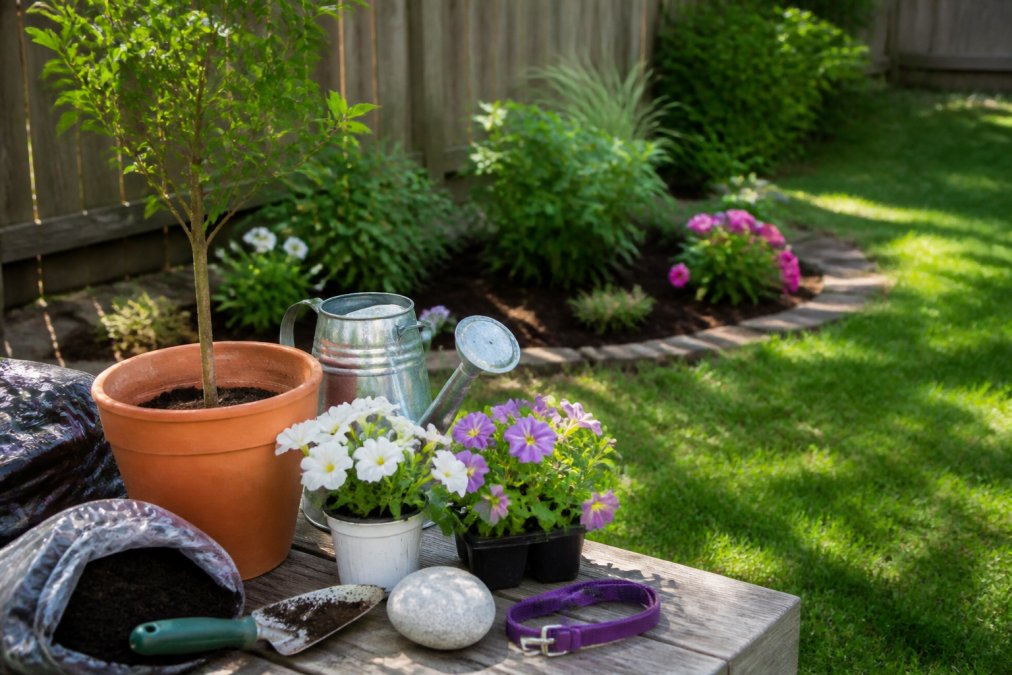
Choosing Plants and Placement for Your Memorial Garden
Match the plant to the pet's personality and your climate: a sun-loving dog might get a bright perennial bed, a shade-napping cat ferns or hostas.
Place the garden where you will actually see it. A forgotten corner becomes a source of guilt rather than comfort. If you rent or move often, a container garden travels with you and still gives you a dedicated spot to visit.
Pet Memorial Gift Ideas for Comfort and Remembrance
The best pet memorial gift ideas are personal, durable, and matched to the recipient's comfort level, not the giver's. A keepsake that sits on a shelf for years beats a grand gesture that overwhelms.
Consider these options:
- Cremation jewelry that holds a small amount of ash or fur
- Paw print impressions in clay or ink
- A photograph plaque or framed portrait
- A pet urn for ashes, if the family chose cremation
- A personalized keepsake such as an engraved ornament or wind chime
The memorial collection at Bella's Gifts focuses on sentimental, personalized pieces, allowing a gift to carry a name, a date, or a small detail that belonged only to that animal.
DIY Memorials on a Budget
Meaningful does not require expensive, build the tribute from things you already have.
- Frame a favorite photo in a thrift-store frame and handwrite the date.
- Press a paw print into air-dry clay and let it set.
- Plant a cutting from your own garden in a simple pot.
- Write a short letter to your pet and keep it in a memory box.
These cost little and often mean more than a purchased item, because the effort is visible.
Donating to Animal Shelters in Memory of a Pet
Donating to animal shelters in memory of a pet turns grief into something that helps another animal. Many shelters accept monetary gifts, supplies, or sponsored adoption fees, and some note the tribute in their newsletter.
Call the shelter first and ask what they need most. Blankets, food, and cleaning supplies are frequently requested, and donating your pet's unopened food is a quiet, dignified way to honor them.
For a lasting tribute, sponsoring a specific animal's adoption fee or volunteering a few hours each month keeps the pet's legacy active rather than frozen in one transaction.
How to Honor a Lost Pet Through Ceremony and Tribute
A ceremony gives grief a beginning, a middle, and an end, which is why it helps even when no one else attends. Hold it at home, in a favorite park, or wherever your pet loved to walk. The goal is not perfection, it is a deliberate pause that acknowledges the loss out loud.
Choosing the Right Type of Ceremony
There is no single correct format. The right one depends on who is grieving, how private you want to be, and whether you have remains to handle.
- Private household ceremony. Just you, or you and the people who lived with the pet. Light a candle, read a short tribute, and sit with a photo, good when you do not want an audience for raw emotion.
- Gathering of friends and family. Invite the people who knew the pet, and ask each to bring one memory or photo. Keep it under an hour, grief fatigue is real, and a short ceremony often lands harder than a long one.
- Virtual ceremony. If the people who loved your pet are scattered, a video call at a set time lets everyone participate. Ask each person to light a candle on camera.
- Solitary walk or pilgrimage. Retrace a favorite route or visit a place the pet loved. Some do this on the anniversary rather than immediately, when the first shock has passed.
Step-by-Step: Holding a Home Ceremony
- Set a time and tell people. Even a two-person ceremony benefits from a fixed start time.
- Choose one focal object. A collar, a photo, an urn, or an empty bed, one is enough; a table full of reminders can overwhelm.
- Write three sentences. What the pet was like, one specific memory, and what you will carry forward. Reading from paper is fine.
- Invite others to speak, but do not require it. Some people need to pass; that is not a sign they cared less.
- Close with a physical action. Blow out the candle, place a stone, plant something, or ring a bell, a clear ending helps the nervous system register that the ceremony is over.
- Eat something together afterward. A shared meal, even a simple one, moves people out of acute grief and back into the room.
Cultural and Religious Perspectives on Pet Memorials
How you honor a pet is often shaped by the tradition you grew up in, or chose as an adult. A few common patterns:
- Christian traditions. Some denominations hold blessings of animals and allow a simple graveside prayer; others teach that animals do not have souls, leaving grieving owners feeling unsupported. Many in this position create their own liturgy rather than seek permission.
- Jewish traditions. Judaism has a strong ethic of kindness to animals, and some families recite a short psalm or say a few words at burial. Formal pet funerals are less common, but a quiet graveside moment fits many households.
- Buddhist traditions. Many practitioners dedicate merit to the animal, light incense, or recite a short chant. The framing is often that the pet's consciousness continues, which can comfort.
- Indigenous and earth-based practices. Some traditions treat the animal as a relative and mark the loss with a returning-to-the-earth ritual, such as burying the pet with a favorite blanket or placing tobacco or cedar.
- Secular and humanist approaches. A humanist ceremony focuses on the bond itself, no afterlife claims, just honest acknowledgment that a real relationship has ended.
If you are not sure what fits, borrow. There is no rule that says you must stay inside one tradition. Many people combine a candle, a poem, and a walk, and that is a complete ceremony.
Writing an Obituary or Tribute
An obituary for a pet is a short written remembrance that names the animal, captures its personality, and gives the people who loved it a place to put their feelings into words. It need not be long or published anywhere.
Cover the basics: the pet's name, how they came into your life, one or two specific quirks, and what they meant to you. Details like how they greeted you at the door carry more weight than grand statements. Read it aloud once, if it makes you cry, it is probably honest.
If you want to share it, a few options work well:
- Post it on a personal social account with a single photo.
- Submit it to a pet-loss support community, where others will read it and respond.
- Print it and keep it in a memory box, or frame it beside a photo.
- Read it aloud at the ceremony, then place it with the pet's remains or in the garden.
Creating an Online Tribute or Digital Album
A digital tribute gives friends and family a place to add memories over time, often more sustaining than a single event.
- Shared photo album. Create one album and invite the people who knew the pet to add photos and a one-line caption. The captions are often what people return to.
- Memorial page. Several pet-loss organizations and memorial sites host free tribute pages where you can post a photo, a short bio, and a guestbook.
- Video tribute. A short slideshow set to a song that mattered to you takes an evening to make and can be watched on anniversaries.
- Annual reminder. Put a recurring calendar entry on the pet's adoption day or the day they died. A single candle and a few minutes of quiet is enough.
Helping Children Cope With Pet Loss
Children often grieve differently from adults, asking blunt questions or seeming fine one day and inconsolable the next. This matters, because a child's first experience of death is often a pet's, and how you handle it shapes how they understand loss for years.
What Children Understand at Different Ages
A four-year-old and a fourteen-year-old need very different conversations (peer-reviewed research). Matching your language to their development prevents confusion and gives them something to hold onto.
- Ages 2-5. Children this age often see death as temporary or reversible and may repeatedly ask when the pet is coming back (the NIH). Use plain, concrete language: "Buddy's body stopped working, and he cannot come back. He is not in pain." Avoid "put to sleep" (can make bedtime frightening) and "we lost him" (suggests the pet could be found).
- Ages 6-9. Children this age begin to understand death is permanent and often personalize it, worrying they caused it or that other family members will die (aacap.org). Reassure them directly: "Nothing you did or said made this happen." Invite questions and answer honestly, even the hard ones.
- Ages 10-13. Preteens grasp the biology and may want facts, but may hide grief to avoid upsetting adults. Check in privately, and let them see you grieve, it gives them permission to do the same.
- Teenagers. Teens may grieve intensely but privately, leaning on friends more than family. Do not force a conversation, leave the door open and let them know you are available without pressure.
What to Say, and What to Avoid
A few phrases tend to help, and a few tend to backfire.
Say:
- "I am sad too. It is okay to be sad."
- "It is not your fault."
- "We can talk about Buddy whenever you want."
- "Would you like to help choose where we put his stone?"
Avoid:
- "He went to sleep." (Can create fear of sleep.)
- "He ran away." (Can create abandonment fears and false hope.)
- "We can get a new one right away." (Suggests the pet is replaceable.)
- "Don't cry." (Teaches them to hide grief.)
Age-Appropriate Ways for Children to Take Part
Letting a child participate in the memorial gives them a sense of control when everything feels uncertain. Match the activity to their age and let them opt out if they want.
- Draw or paint the pet. Works for almost any age. Hang the drawing near the memorial or in their room.
- Write a letter or a short goodbye. For school-age children and teens. They can read it aloud at the ceremony or keep it private.
- Choose a plant or a stone. Let them pick the color or spot, a small decision that gives them ownership.
- Make a memory jar. Everyone writes one memory on a slip of paper and drops it in. The jar stays on a shelf and can be opened on hard days.
- Help with the ceremony. Lighting a candle, placing a photo, or holding the leash during a walk gives a concrete role.
When to Seek Extra Support
Most children move through pet loss with time and honest conversation. A few signs suggest they need more help:
- Persistent trouble sleeping, eating, or going to school more than a few weeks after the loss.
- Repeated guilt or self-blame that does not ease when you reassure them.
- Withdrawal from friends or activities they used to enjoy.
- Regression, such as bedwetting in a child who had been dry, lasting more than a short period.
If any persist, a school counselor or grief-trained child therapist is a reasonable next step. Pet-loss support lines and humane societies in many areas also offer free resources for families.
Managing Grief Triggers at Home
Grief triggers are the everyday sights and sounds that bring the loss back without warning: the empty spot on the couch, the jingle of a collar, the food bowl you have not moved.
You cannot remove every trigger, and should not try. Instead, decide which to keep and which to change.
| Trigger | Common Reaction | Practical Fix |
|---|---|---|
| Empty food bowl | Sudden sadness at mealtimes | Move it, or repurpose it as a keepsake holder |
| Favorite sleeping spot | Reaching to pet out of habit | Place a cushion or plant there |
| Collar or leash by the door | Fresh wave of grief | Store it in a memory box, or display it deliberately |
| Photos on your phone | Unexpected tears when scrolling | Create a dedicated album so they are seen on your terms |
A common mistake is treating every trigger as a problem to eliminate. A few chosen reminders help most people more than a house scrubbed clean of the pet.
Frequently Asked Questions
How can I comfort someone who has lost a pet?
Acknowledge their loss directly and avoid minimizing it. Say something like, 'I'm so sorry about [pet's name]. They were lucky to have you.' Offer specific help: bringing a meal, walking their other dog, or sitting with them. A thoughtful pet memorial gift, such as a paw print keepsake or a donation to an animal shelter in their pet's name, shows you understand the depth of their bond. Follow their lead on whether they want to talk or just need quiet company.
What are some appropriate ways to memorialize a pet?
You can create a pet memorial garden with a tree or flowering shrub, commission a custom portrait or cremation jewelry, write an obituary or tribute, hold a small ceremony, or donate to an animal shelter in memory of a pet. Many people also preserve paw prints, fur clippings, or a favorite collar in a shadow box. Choose the approach that feels meaningful to you, whether that's a quiet private ritual or a gathering with friends who knew your pet.
How long does the grieving process for a pet typically last?
There's no fixed timeline. Some people feel acute grief for weeks, while others experience waves of sadness for months or longer, especially around anniversaries or holidays. Pet loss grief support from a counselor or support group can help if the sadness interferes with daily life. The intensity usually softens over time, but the bond doesn't disappear. Let yourself move at your own pace and lean on people who understand how much your pet meant.
What are some condolence messages I can use for someone who has lost their dog?
Keep it simple and sincere: 'I'm so sorry for your loss. [Dog's name] was such a good boy and clearly loved.' Or, 'Thinking of you and the joy [dog's name] brought to everyone.' Avoid phrases like 'it was just a dog' or 'you can get another one.' If you knew the dog, share a specific memory: 'I'll never forget how he greeted everyone at the door.' Pair your message with a practical offer, like dropping off dinner or helping with errands.
Grief over a lost companion rarely follows a straight line, and finding a way to honor that bond can make the hardest days a little lighter. If you are looking for a keepsake that carries a name, a date, or a small detail that was theirs alone, Bella's Gifts offers personalized memorial pieces made for exactly this moment. Explore the memorial collection to find a tribute that feels like them, and let a lasting reminder sit somewhere you will see it every day.